Anúncios
In a world where cyber threats have become part of daily news, it’s hard to imagine that the very first computer virus was created as a joke. No data theft, no file destruction, no digital espionage. In 1971, a little program called Creeper appeared on connected systems — and its sole purpose was to display a quirky message:
“I’m the creeper: catch me if you can!”
Simple, direct, and in a strange way… kind of charming. Creeper didn’t cause harm, didn’t delete files, and didn’t spy on anyone. It jumped from computer to computer like a kid skipping through neighbors’ yards, just to say it had been there. And so, a whole new era in digital history was born.
Anúncios
In this article, we’ll dive into this curious origin story and explore how a harmless experiment gave rise to a phenomenon that now concerns governments, corporations, and users around the world. Let’s trace the evolution of computer viruses — from playful to catastrophic.
🖥️ The Birth of Creeper: An Experimental Virus With an Explorer’s Soul
In 1971, the internet as we know it didn’t exist yet. But there was ARPANET, an experimental project by the U.S. Department of Defense that connected research centers and universities — the foundation of what would become the internet.
Anúncios
It was in this environment that Bob Thomas, a programmer at BBN Technologies, created Creeper. His goal? To test an idea: that a program could move from one computer to another across a network. It wasn’t malicious. Just a creative provocation. Creeper installed itself, displayed its famous message — “Catch me if you can!” — and then attempted to jump to the next machine, erasing itself from the previous one. More of a living experiment than a virus by today’s standards.
And the most curious part? At that time, no one saw it as a threat. It was a technical demonstration, a “what if…” turned into code. But like many innovations, what began as fun would soon draw attention for its more… dangerous possibilities.
🧼 The First Antivirus Was Also a Joke
Where there’s a virus, there’s a countermeasure. And so, the Reaper was born — considered the first “antivirus” in digital history. Created by another programmer at BBN, Reaper was essentially a Creeper hunter: it scanned the network, found Creeper instances, and deleted them. Interestingly, Reaper also spread from machine to machine, making it — technically — a kind of virus too, though with a protective purpose.
That cycle — virus, response, counterattack — would become a recurring theme in the history of cybersecurity. But back then, it was all still playful. No data was being stolen, no accounts hacked. Just experiments, ideas, and a future quietly unfolding.
🦠 From Curiosity to Threat: When Viruses Turned Dangerous
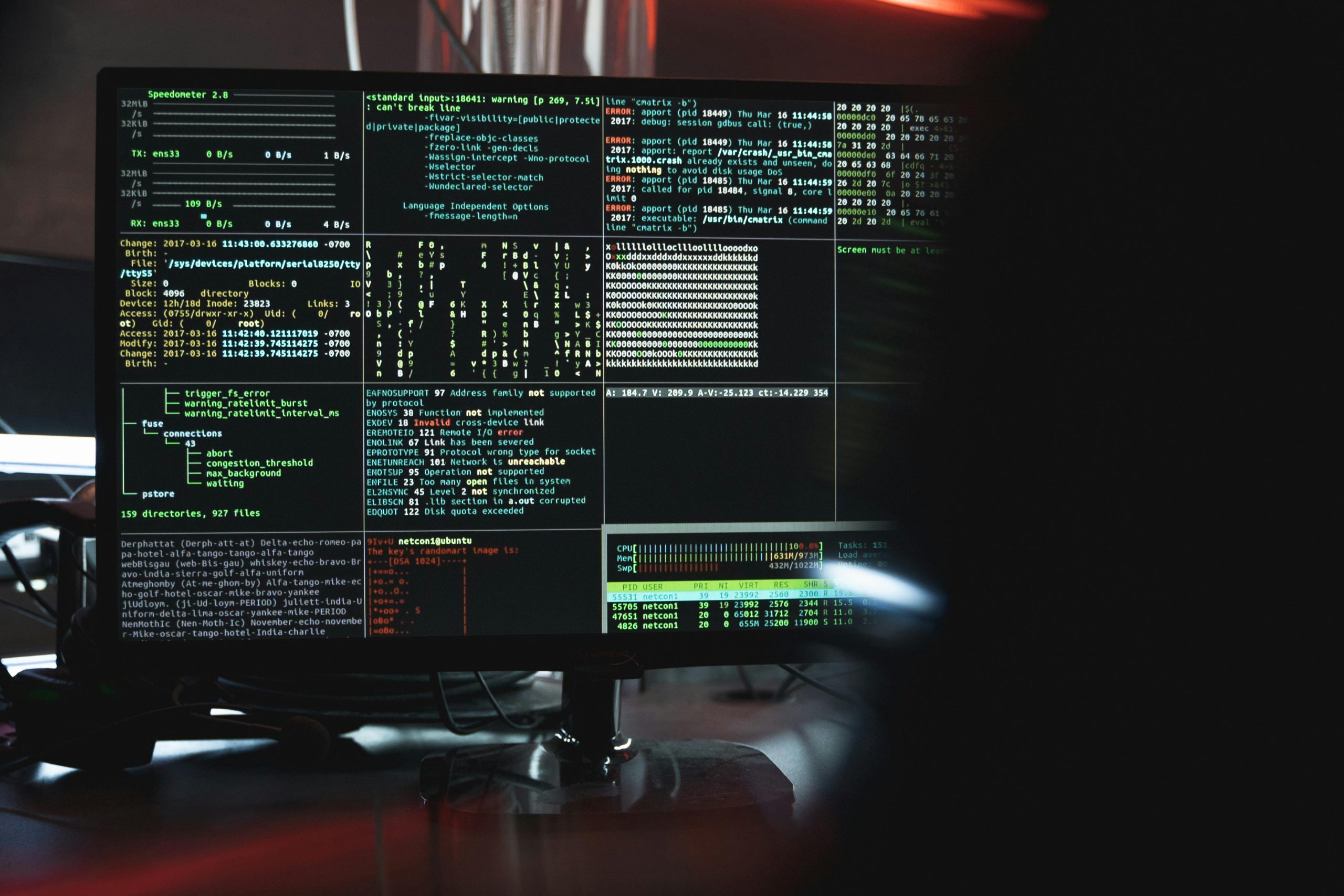
Things started to shift in the 1980s. The term “computer virus” was formally coined in 1983 by researcher Fred Cohen, who defined it as a program capable of infecting other programs and replicating itself. With the rise of personal computers, access to technology became widespread — and with it, the potential for digital harm grew.
One of the first impactful viruses was Brain, created in 1986 by two brothers in Pakistan. It wasn’t destructive, but it was the first virus to spread through floppy disks — the common file-sharing method at the time. Curiously, Brain even included the creators’ names, phone number, and address in its code, as if it were a calling card.
From there, viruses shifted from being technical novelties to tools of sabotage, protest, activism — and eventually, crime. What started with “catch me if you can” evolved into something far more serious.
💰 The Age of Cybercrime: The Birth of an Underground Market
With the expansion of the internet in the 1990s and 2000s, viruses evolved into what we now call malware — a broader term that includes spyware, ransomware, trojans, and more. And with them, organized cybercrime was born.
One of the most infamous early examples was ILOVEYOU, a 2000 virus that spread via email using a love-themed subject line. It caused billions of dollars in global damages. Within days, companies and governments saw their systems compromised — and the world realized that this was no longer just digital mischief.
More recently, attacks like WannaCry in 2017 disrupted hospitals, banks, and government systems. This ransomware locked users’ files and demanded payment in cryptocurrency to restore them — a tactic now common in modern cyberattacks.
Today, the cybercrime economy is a multi-billion-dollar industry. Pre-made virus kits are sold on the dark web, and “hacking as a service” is a real business model. The complexity has grown to the point where large corporations need entire cybersecurity teams just to stay protected.
🔐 How Cybersecurity Has Evolved — And Why It’s Still Catching Up
Since Creeper, the digital security industry has come a long way. We now have antivirus software powered by artificial intelligence, advanced firewalls, two-factor authentication, end-to-end encryption, and real-time threat monitoring systems.
But despite all that, attacks still happen. Why?
Because hackers evolve along with the defenses. For every new security layer, there’s a new way to bypass it. It’s a constant game of cat and mouse — and innovation fuels both sides.
And let’s not forget the human factor, which remains the weakest link. One careless click on a phishing link, one weak password, one outdated device — that’s all it takes for an attacker to break through.
🧠 Where Do Viruses Come From Now? And What’s Next?
Modern viruses aren’t always built by a lone coder in a basement. Many are developed by well-organized groups, sometimes even funded by governments — as in cases of international digital espionage.
Digital warfare is real. And the battlefield can be anywhere: your phone, your home Wi-Fi, or the air traffic control system of an entire country.
At the same time, we also have more sophisticated tools for rapid response, forensic analysis, intelligence sharing, and global cooperation in combating threats. The challenge for the future is to maintain that balance — using technology to protect without sacrificing privacy or freedom.
🧩 The Deeper Question: Can a Simple Idea Spiral Out of Control?
The Creeper story also invites deeper reflection. Many technological innovations started with good intentions — yet were used in unpredictable ways. This is true of social media, facial recognition, AI, and of course, computer viruses.
Perhaps the most important lesson here is: technology is a tool. It’s how we use it that defines its impact. That’s why discussions around ethics, boundaries, and responsibility are just as important as innovation itself.
📌 Conclusion: From “Catch Me If You Can” to “Protect Yourself If You Can”
Creeper, the little program that cheerfully hopped from computer to computer back in 1971, has become almost a legend. Not because it did damage — but because it started something. A new era where digital code would have real-world consequences.
From the playful Creeper to malware that can cripple governments and steal fortunes, the path has been long. But in the end, the principle remains the same: code has power. And with power comes responsibility.
Staying alert, keeping systems updated, using strong passwords, and understanding digital risks are essential habits — and they make all the difference. And next time someone asks about the origin of computer viruses, you’ll be able to tell the story of Creeper: the virus that just wanted to be noticed… and ended up leaving a legacy that still shapes our world.