Anúncios
I have always found it fascinating how something as simple as breathing—a process we do all day without thinking—can play such a powerful role in quieting the mind. In 2026, the world feels even busier. Notifications, breaking news, and deadlines seem to be always knocking. Anxiety follows close behind, whispering worries and doubts when we least expect it. Yet, again and again, I return to mindful breathing. It might not solve every problem, but in my experience, it’s like a small anchor in a stormy sea. I want to share what I know, what I’ve tested, and what seems to matter most about mindful breathing for anxiety relief today.
Understanding mindful breathing
Before I discovered mindful breathing, I thought of breathing as a background activity. Well, I was wrong. Mindful breathing means paying attention to your breath—moment by moment, deliberately, with curiosity and care. It isn’t about controlling, fixing, or even trying too hard. It’s about noticing, sensing, and accepting. In my own practice, sometimes I just sit, close my eyes, and feel the air as it enters and leaves my nose or mouth. Nothing dramatic. Yet, that simple act shifts my awareness. I start noticing the present moment—how my chest moves, the sound of my breath, or maybe the slight pause between inhalations and exhalations. Sometimes my mind wanders, and that’s fine. I gently come back.
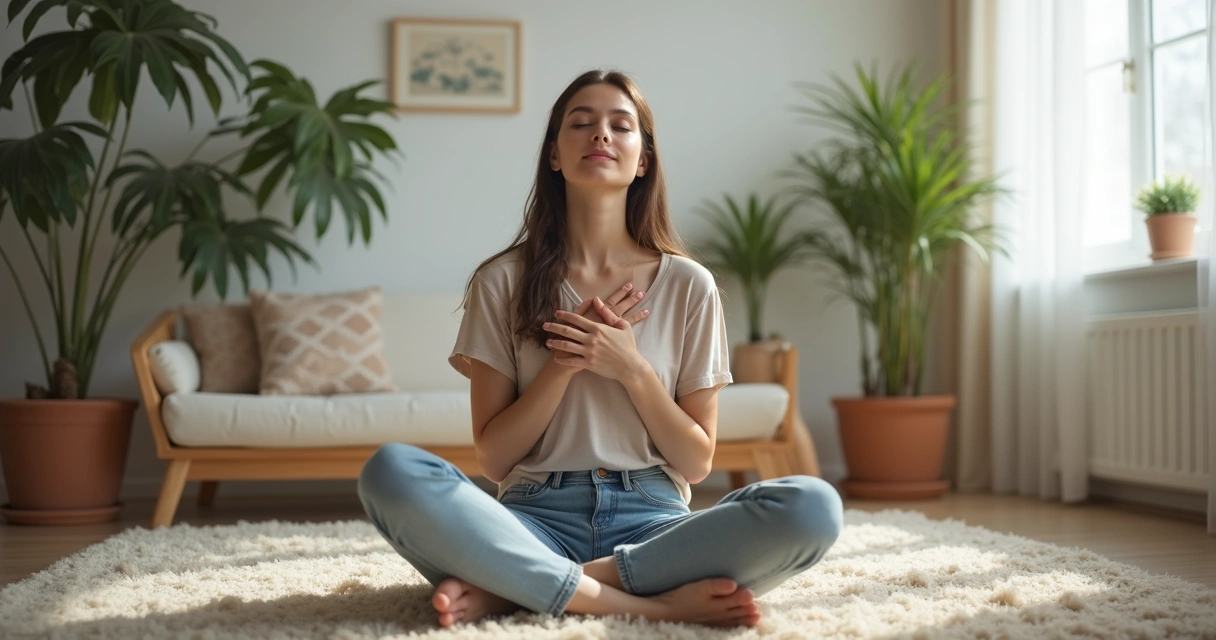 There’s no need to force yourself to feel anything special. The goal isn’t to banish anxiety, but to accept what comes and to ground yourself where you are. I used to get impatient, expecting instant calm. Instead, these days, I approach it almost like watching clouds—sometimes the sky is clear, sometimes it’s stormy, and sometimes it’s just gray.
Anúncios
Why mindful breathing helps with anxiety
I’ve seen how mindful breathing does something that anxiety can’t tolerate: it brings my focus away from spiraling thoughts and back to simple sensation. When I’m anxious, my breathing becomes fast or shallow almost before I notice it. My heart rate goes up, and my muscles get tense. These are classic signs of the stress response. But when I pause and notice my breath, a few interesting things start to happen:
- My breath naturally slows down and deepens.
- Physical tension begins to ease, often without my trying.
- The loudness of my thoughts begins to drop in volume, even if only by a notch.
There’s science behind this, too. Focusing on breathing signals to the body that it’s safe—not in danger. This calms the nervous system. In my research and talks with health professionals, many pointed out that mindful breathing can lower blood pressure and reduce stress hormones. That alone makes it worth coming back to, especially on anxious days.
Anúncios
Breathing in, I anchor myself. Breathing out, I find stillness.
Getting started: My own approach to mindful breathing
Some guides complicate mindful breathing, but I keep it straightforward. Over the years, I’ve noticed that simple steps actually work best—at least for me and for friends I’ve shared them with. If you’re new to mindfulness, or if you find anxiety makes it hard to concentrate, don’t worry about doing it “right.” There’s no perfect way.
Step 1: Find your spot
I usually begin by choosing a spot that gives me a bit of comfort. It could be a chair, a cushion, the floor, or even my bed. What matters is feeling safe and supported. I like to sit upright (not too rigid or too slouched), close my eyes, or keep a soft gaze. If I’m in public, I just look downward and focus inwardly.
Step 2: Tune in to your breath
I notice where I feel my breath most clearly. For me, it’s usually the tip of my nose or the gentle rise and fall of my abdomen. I place a hand there if I want even more focus. With each inhalation, I notice the coolness or movement; with each exhalation, I pay attention to warmth or the sensation of letting go. Sometimes my mind wanders, and that’s perfectly natural. The trick is to gently come back, again and again, without judgment.
Step 3: Count or say gentle phrases (if needed)
When my mind feels turbulent, I sometimes count my breaths, silently to myself—one on the in-breath, two on the out-breath, up to ten. If I lose track, I simply start over. Other days, I use phrases: “Breathing in, I calm the body. Breathing out, I release tension.” I find these help steady my attention. You could use whatever language feels natural to you; there are no rules here.
 Step 4: Allow thoughts and feelings
This one is tricky for me, and maybe for others. Instead of trying to push worries away, I imagine them as distant sounds or passing cars. Mindful breathing gives me space to notice thoughts without having to follow them. Some days, my mind is noisy; other days, it’s quieter. I try not to measure success by how “quiet” my mind gets—just by my willingness to pay attention and stay with my breath.
Different mindful breathing techniques
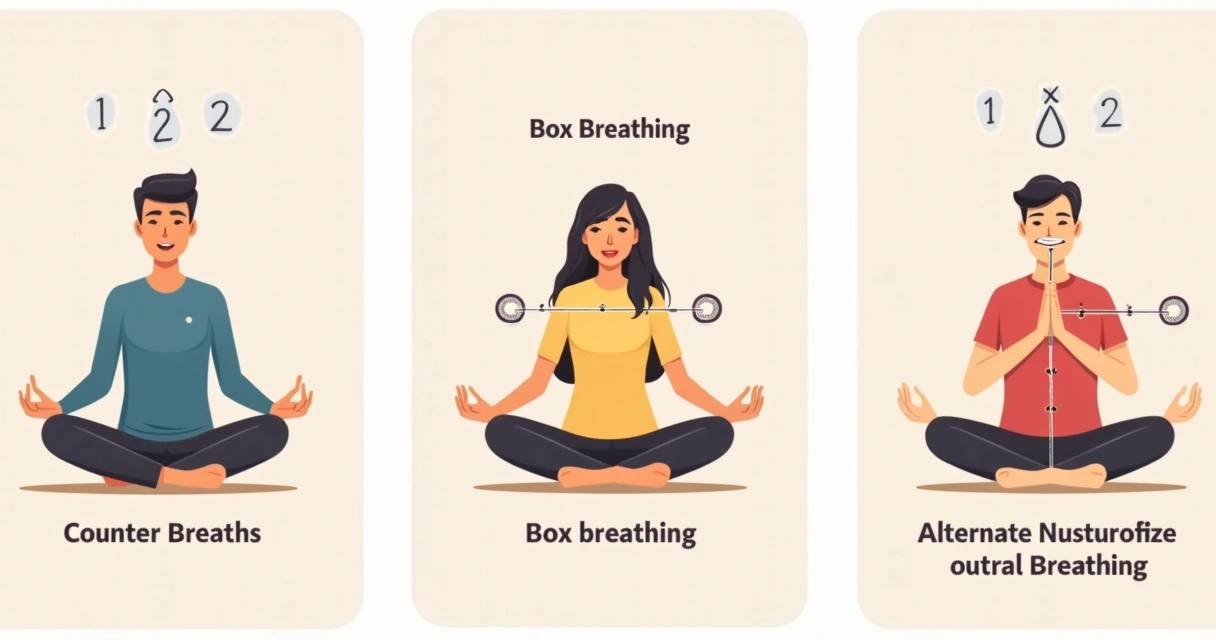
Over time, I’ve experimented with several breathing methods. Some days, one feels right; another day, a different one fits the situation better. Here are a few I’ve come back to again and again:
- Box breathing: Inhale for four counts, hold for four, exhale for four, hold for four. I use this one before interviews or stressful meetings.
- 4-7-8 breathing: Inhale for four counts, hold for seven, exhale slowly for eight. This feels soothing before sleep.
- Alternate nostril breathing: With one hand, close a nostril, inhale through one, switch nostrils, and exhale through the other. Repeat. It balances the body and can quiet racing thoughts.
- Simple abdominal breathing: Place one hand on the chest, one on the belly, and focus on letting the belly hand rise and fall. I often use this in traffic or crowded places.
Not every technique is for everyone. Sometimes I stick with regular, gentle breaths, especially if anxiety is already high. Trying new breathing styles can be interesting, but I always listen to what feels comfortable.
 Integrating mindful breathing into daily life
One thing I’ve learned is that mindful breathing isn’t just for meditation sessions. I sneak it into other moments, and it becomes more like a gentle habit than a task. Here are some ways I fit it in:
- When waking up—before grabbing my phone, I take three slow breaths.
- Before (or during) stressful situations, like speaking in public or getting stuck in traffic.
- On breaks at work or school, I pause, close my eyes, and give myself a minute.
- When going to bed, I slow my breathing to settle my body and thoughts.
Some days, I forget. Other days, it happens naturally. Over time, returning to my breath when anxiety rises has started to feel less like an exercise and more like a quiet friend. I can’t claim it erases worry, but it has often kept me from feeling overwhelmed.
What to do when mindful breathing feels hard
There have been times when breathing exercises didn’t seem to help much. My mind raced, or my body felt restless. In those moments, I remind myself that it’s okay. Sometimes, anxiety is sticky—no trick or tip works right away. If I feel overwhelmed, I stand up, take a walk, or look outside for a few minutes. Coming back to breath practice later, even for a single conscious breath, can be enough. Being gentle with myself is perhaps the part I forget most, but it’s also—ironically—what makes mindful breathing work better in the long run.
An imperfect practice is still practice.
Conclusion
In a world that seems to spin faster every year, I have found that mindful breathing is a steadying presence. It doesn’t ask anything fancy from me—just that I pause, pay attention, and let my breath lead for a little while. Mindful breathing can help relieve anxiety by bringing you into the present, easing physical tension, and creating a sense of space between you and your worries. I can’t promise it fixes everything, nor do I think it should. But I know from experience, and from the stories others share, that practicing mindful breathing opens a small door to calm—sometimes in just a few breaths.
Frequently asked questions
What is mindful breathing?
Mindful breathing is the act of bringing your attention fully to your breath as you inhale and exhale, observing sensations and patterns without trying to change them. The approach is gentle and curious, not rigid or controlling. It’s about noticing where your attention goes and kindly bringing it back when it wanders.
How does mindful breathing help anxiety?
Mindful breathing gives your mind something simple and steady to focus on, which interrupts anxious thought cycles and tells the body to shift out of stress mode. By making the breath slower and deeper, it calms the nervous system. Over time, this helps you notice anxious feelings without being overwhelmed by them.
How to start mindful breathing practice?
I recommend finding a comfortable spot, either sitting or lying down. Close your eyes if that helps. Bring your attention to where you feel your breath most clearly—maybe the nose or belly. Focus on each inhale and exhale. If your mind wanders (which it will), gently return your attention to your breath. You can use counting or gentle phrases like “in, out” or “breathing in, breathing out” for extra focus.
How long should I practice each day?
Start small—just one to five minutes is enough for beginners, and you can add more time as it feels comfortable. Some people find a full ten or twenty-minute session helpful, while others prefer brief breathing breaks throughout the day. Frequency and consistency matter more than total time.
Is mindful breathing safe for everyone?
Mindful breathing is generally safe for most people and doesn’t require special training. However, if you have certain health conditions (such as severe asthma or respiratory issues), or if focusing on your breath triggers distress, it’s a good idea to consult with a healthcare provider. You can always adapt the practice to fit your comfort level.